

Manuals of product 100 l

Editorial note
The Baxi 100 l water heater stands out for its capacity of 100 liters, perfectly suited to the needs of an average household. Recognized for quality and innovation, this model ensures optimal performance and an enhanced user experience thanks to its ergonomic design. It comes with a user manual and an energy label, making installation easier and allowing for a better understanding of its efficiency. However, several drawbacks must be taken into account. Its bulkiness can pose space issues, especially in smaller homes. Additionally, the purchase and installation cost can be a barrier for some budgets. Although the Baxi 100 l offers appreciable robustness, its energy efficiency may not meet the latest standards, potentially leading to higher operating costs. Finally, the noise emitted during operation can be disruptive in open living spaces, and the lack of modern features, such as smart connectivity, makes it less competitive compared to other products on the market. In summary, the Baxi 100 l is a solid choice for those seeking a reliable and efficient water heater, but it is important to consider its limitations in terms of cost, bulkiness, and features.Score details
User experience
The user experience is enhanced by the ergonomic design of the Baxi 100 l, which meets modern needs.
Performance
This model guarantees optimal performance and efficient use, although it may not meet the latest standards in energy efficiency.
Value for money
The purchase and installation cost can be high, which limits its accessibility for some budgets.
Usability
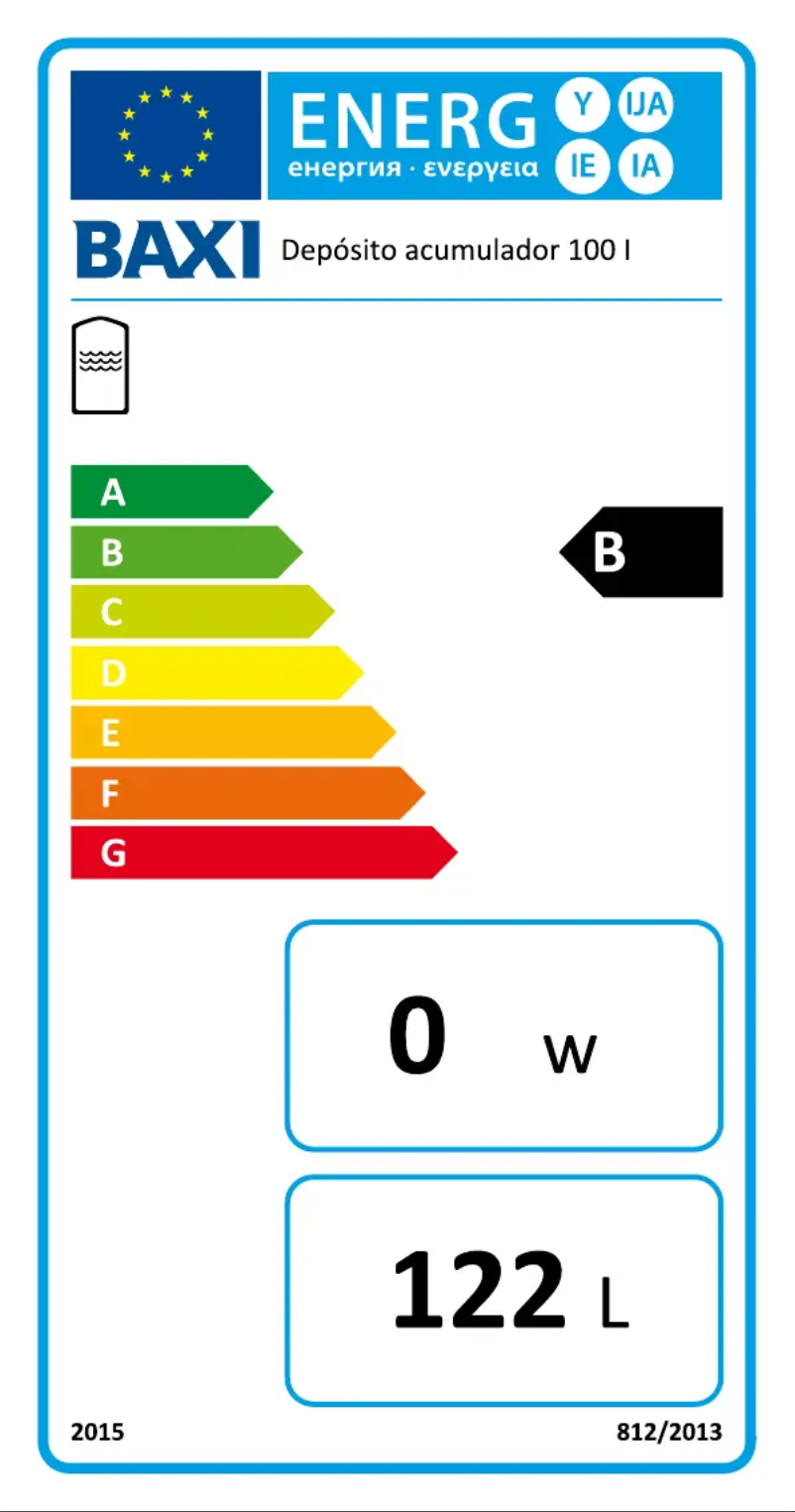
The product comes with a user manual and an energy label, making its installation and understanding easier.
Design
Although the design is functional, the Baxi 100 l can be relatively bulky, posing space issues in smaller environments.
Features
The absence of certain modern features, such as smart connectivity, may make it less attractive compared to other products on the market.
Robustness
The model is designed to optimize performance and ensure increased durability, thus reinforcing the reputation of the Baxi brand.
noise
The noise emitted by the Baxi 100 l during operation can be disturbing, especially in open living spaces.
Advantages
Baxi brand recognized for its quality.
Capacity of 100 liters for medium households.
User manual and energy label included.
Performance optimization and durability.
Ergonomic design for a better experience.
Disadvantages
Bulky for small spaces.
High purchase and installation cost.
Energy efficiency below standards.
Disturbing noise during operation.
Lack of modern features.
Technical Specifications 100 l
General Information
-
Model100 L
-
Brand
-
Category
-
Type
-
SKU1543057
-
MPN1543057
Frequently Asked Questions
Is the user manual for the Baxi 100 l available in French?
Similar products


More product categories from brand Baxi
More product types from brand Baxi

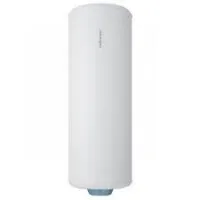


Presentation of product 100 l specifications from brand Baxi
General Information
The Baxi 100 l is a water heater from the Baxi brand, known for its commitment to quality and innovation in the home appliance sector. With a capacity of 100 liters, this model is specifically designed to meet the needs of an average household, ensuring an adequate supply of hot water.
This product stands out for its optimal performance, providing an enhanced user experience thanks to its ergonomic design and features tailored to modern requirements. The Baxi 100 l also comes with a user manual and an energy label, making its installation easier and allowing for a better understanding of its energy efficiency.
Advantages
The Baxi 100 l has several advantages, including:
- A reliability and performance recognized as characteristic of the Baxi brand.
- A sufficient capacity to meet the needs of a typical household.
- A increased durability, ensuring effective use over the long term.
- An ergonomic design that contributes to a pleasant user experience.
Disadvantages
However, the Baxi 100 l also has some disadvantages:
- Its bulkiness may pose space issues in smaller homes.
- The acquisition and installation cost can be high, which may limit its accessibility.
- Its energy efficiency might not meet the latest standards, potentially leading to higher operating costs.
- The noise level during operation can be disturbing, especially in open living spaces.
- Finally, the lack of modern features, such as smart connectivity, may make it less competitive compared to other models on the market.


