

Manuals of product TS190210S

Editorial note
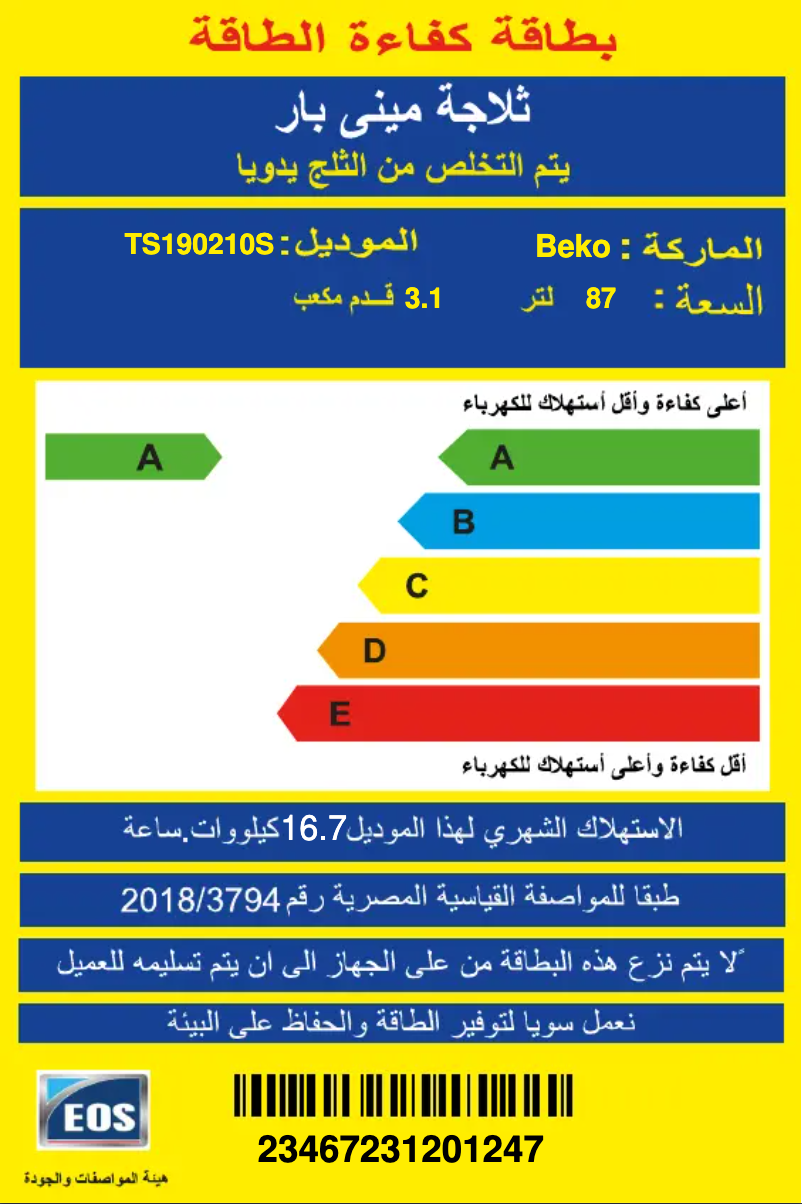
The Beko TS190210S refrigerator stands out for its brand reputation, offering recognized quality and innovation in the home appliance sector. This model ensures optimal performance and an enhanced user experience thanks to its advanced technical features. Access to a user manual and an energy label makes it easier to understand and use the refrigerator, allowing consumers to make informed choices regarding energy consumption. However, some drawbacks must be taken into account. The refrigerator can be noisy during operation, which may be disturbing in a quiet environment. Additionally, its design and finishes may seem less modern compared to other high-end models on the market. The internal storage capacity is limited, which may not be suitable for households with large amounts of groceries, and the temperature adjustment options may be less precise, making it difficult to maintain the ideal temperature. In terms of energy efficiency, although the energy label is an asset, the Beko TS190210S may consume more energy than some energy-efficient models, which could impact electricity bills. In summary, this refrigerator is a reliable option for those seeking a high-performing product, but it is essential to weigh these drawbacks according to the specific needs of each household.Score details
User experience
The user experience is enhanced by optimal performance and advanced technical features.
Performance
The TS190210S model offers good performance but can be noisy during operation, which may be disruptive in a quiet environment.
energy_efficiency
Although the energy label helps assess consumption, the refrigerator may consume more energy than other energy-efficient models.
Design
The design and finishes may seem less modern compared to other high-end models on the market.
Features
The available documents, such as the user manual and energy label, make it easier to understand and use the refrigerator.
Usability
The internal storage capacity is limited and the temperature adjustment options may be less precise, which can pose problems in maintaining the ideal temperature.
Advantages
Renowned brand for its reliability
Advanced technical performance
Manual and energy label included
EAN code for traceability
Energy label for eco-friendly choices
Disadvantages
Disturbing operating noise
Less modern design
Limited storage capacity
High energy consumption
Inaccurate temperature adjustment
Technical Specifications TS190210S
General Information
-
ModelTS190210S
-
Brand
-
Category
-
Type
-
SKU1936133
-
MPN1936133
Frequently Asked Questions
How can I prevent water droplets from forming on the glass shelves of my refrigerator?
What should I do if my refrigerator emits a bad odor?
How much space should I leave around my refrigerator?
What does the term R-410A mean?
Is the manual for the Beko TS190210S available in French?
Similar products


More product categories from brand Beko
More product types from brand Beko


Presentation of product TS190210S specifications from brand Beko
General Information
The Beko TS190210S refrigerator stands out for its robust design and efficiency, reflecting the brand's commitment to innovation and quality in the home appliance sector. This model, known for its reliable performance, is designed to provide an optimal user experience. The EAN code 8690842863561 allows for clear identification and easy traceability of the product within the distribution network.
Advantages
The Beko TS190210S has a well-established reputation, ensuring appreciable durability and reliability. Its functional design and advanced technical features contribute to an improved daily use. Additionally, a detailed user manual and an energy label are provided, facilitating the understanding and optimal use of the appliance. The latter also helps users assess their energy consumption, thus promoting more environmentally friendly choices.
Disadvantages
However, it should be noted that the refrigerator may generate a noticeable noise level during operation, which could be unpleasant in a quiet environment. Furthermore, its aesthetics and finishes may appear less contemporary compared to other higher-end models available on the market. The internal storage capacity may also not meet the needs of households with substantial provisions. Additionally, the energy consumption may be higher than that of some energy-efficient models, which could influence electricity costs. Finally, the temperature adjustment options may lack precision, sometimes making it difficult to maintain an optimal temperature.


