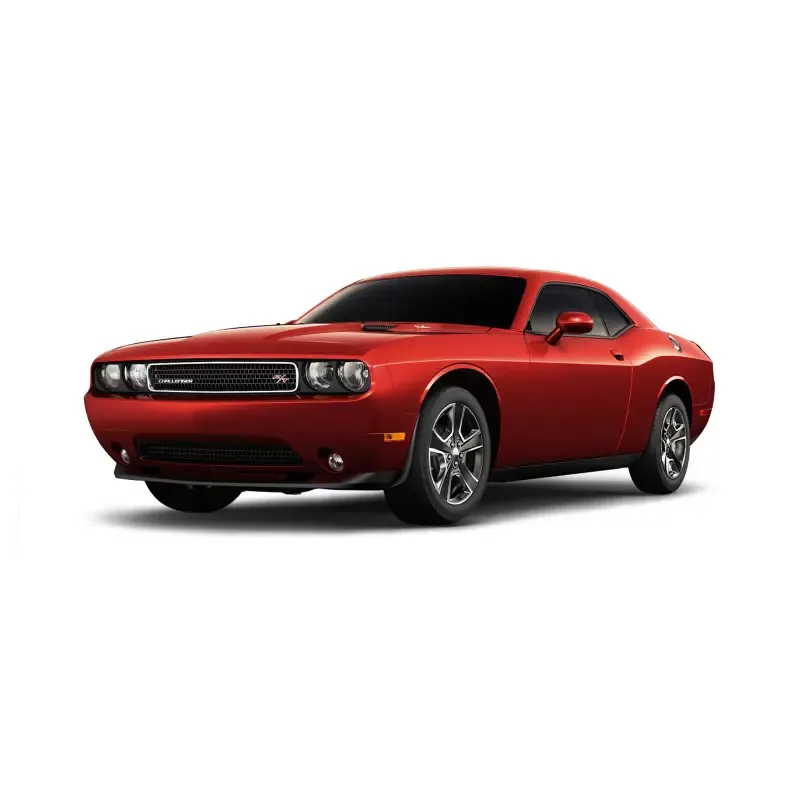
Thumbnail of product Challenger (2011) from brand Dodge
Logo of brand Dodge

Car Dodge Challenger (2011)

Discover the Dodge Challenger (2011), an iconic car from the Dodge brand, known for its performance and bold style. This model combines power and comfort, offering an unparalleled driving experience.

The Dodge Challenger (2011) is designed for thrill-seekers, with a powerful engine that ensures responsive driving on the road. Its classic and robust design catches the eye while incorporating modern technologies to enhance the user experience.

In addition to its road capabilities, the Dodge Challenger (2011) comes equipped with essential documents for owners, including a user manual, a maintenance and operation manual, and safety instructions, to ensure proper maintenance and safe driving.

In summary, the Dodge Challenger (2011) is a car that combines style, power, and practicality, ideal for those seeking a sporty drive while benefiting from the innovation and quality of the Dodge brand.

8 10

Editorial note

The Dodge Challenger (2011) stands out with its iconic and sporty design, capturing attention and reinforcing the identity of the Dodge brand. With a score of 85 for its design, it is clear that this model has been crafted to appeal to car enthusiasts. In terms of performance, the Challenger excels thanks to its powerful engine, offering a dynamic and exhilarating driving experience, as evidenced by its score of 90. The interior comfort is also well-designed with quality materials, promising a pleasant user experience during trips, which earns it a score of 80. However, a few drawbacks deserve to be highlighted. Fuel consumption is relatively high, which can lead to additional costs for users, resulting in a score of 65 for value for money. Additionally, limited rear visibility and restricted space for rear passengers can make certain maneuvers more difficult and less comfortable, which is reflected in the scores of 70 and 60 for usability and robustness, respectively. Regarding features, although the Challenger has advanced technologies, the connectivity may seem outdated compared to more recent models, earning it a score of 75. Nevertheless, the accessibility of useful documents, such as the user manual and safety instructions, facilitates the maintenance and use of the vehicle, with a score of 80. In summary, the Dodge Challenger (2011) is a car that stands out for its aesthetics and performance, while having some limitations regarding fuel consumption and interior space. For those who prioritize style and power, this model could be an excellent choice.

Score details

Design

The iconic and sporty design of the Dodge Challenger (2011) attracts attention, reinforcing the unique identity of the Dodge brand.

Performance

Optimal performance thanks to a powerful engine offers a dynamic and exhilarating driving experience.

User experience

The interior comfort is well thought out with quality materials, ensuring a pleasant user experience during trips.

Features

Advanced technologies, such as safety and infotainment systems, are available for a modern and secure driving experience.

Value for money

The relatively high fuel consumption can lead to additional costs for users.

Usability

Limited rear visibility due to the vehicle's design can complicate maneuvers and parking.

Robustness

The vehicle's heavy weight can affect handling and agility on the road.

Documentation

The accessibility of useful documents, such as the owner's manual and safety instructions, facilitates the maintenance and use of the vehicle.


Advantages

Sporty and iconic design

Powerful and dynamic performance

Comfortable and high-quality interior

Modern and secure technologies

Accessible manual and maintenance instructions

Disadvantages

High fuel consumption

Reduced rear visibility

Limited interior space

High vehicle weight

Outdated technologies compared to recent ones

Technical Specifications Challenger (2011)

General Information

Frequently Asked Questions

How do I convert miles to kilometers?
To convert miles to kilometers, know that one mile is equal to 1.609344 kilometers, while one kilometer is equivalent to 0.62137119 miles. Q: Where can I find the VIN number of my Dodge? A: The location of the VIN number varies depending on the model and make of the vehicle. It may be stamped or affixed to the chassis of the car. To find the exact location of the VIN number on your Dodge, refer to the owner's manual. Q: What is the VIN number? A: The VIN number is a unique identifier assigned to each vehicle. The acronym VIN stands for Vehicle Identification Number. Q: How often should I have my Dodge serviced? A: It is essential to perform regular maintenance on your vehicle. The maintenance manual specifies the recommended frequency for servicing as well as the list of items to check. Generally, a complete service is advised every two years or after 30,000 kilometers. Q: When is it advisable to change the brake fluid in my Dodge? A: It is recommended to replace the brake fluid every two years. Q: What is the difference between E10 and E5 gasoline? A: E10 gasoline contains up to 10% ethanol, while E5 gasoline contains less than 5%. Thus, E10 has a lower gasoline proportion, making it more environmentally friendly. Q: What should I do if one or more doors do not open from the inside? A: This may be due to the child safety lock preventing the doors from opening from the inside. The system to disable this safety feature varies by make and model. Q: My car radio won't turn on, what should I do? A: If your car radio won't turn on, it may not be properly connected. Ensure that the red wire is connected to the ignition power and the yellow wire to the constant power. Q: Is the manual for the Dodge Challenger (2011) available in French? A: Unfortunately, the manual for the Dodge Challenger (2011) is not available in French. It is only offered in English.
Où se trouve le numéro VIN de ma Dodge ?
L'emplacement du numéro VIN varie selon le modèle et la marque du véhicule. Il peut être estampé ou fixé sur le châssis de la voiture. Pour connaître la localisation précise du numéro VIN sur votre Dodge, référez-vous au manuel d'utilisation.
Qu'est-ce que le numéro VIN ?
Le numéro VIN est un identifiant unique attribué à chaque véhicule. L'acronyme VIN signifie Vehicle Identification Number (numéro d'identification du véhicule).
À quelle fréquence dois-je faire réviser ma Dodge ?
Il est essentiel d'effectuer un entretien régulier de votre véhicule. Le manuel d'entretien précise la fréquence recommandée pour les révisions ainsi que la liste des éléments à contrôler. En général, une révision complète est conseillée tous les deux ans ou après 30 000 kilomètres.
Quand est-il conseillé de changer le liquide de frein de ma Dodge ?
Il est recommandé de remplacer le liquide de frein tous les deux ans.
Quelle est la distinction entre l'essence E10 et E5 ?
L'essence E10 contient jusqu'à 10 % d'éthanol, alors que l'essence E5 en contient moins de 5 %. Ainsi, l'essence E10 a une proportion d'essence plus faible, ce qui la rend plus écologique.
Que faire si une ou plusieurs portières ne s'ouvrent pas de l'intérieur ?
Cela peut être dû à la sécurité enfant qui bloque l'ouverture des portières de l'intérieur. Le système pour désactiver cette sécurité varie selon les marques et modèles.
Mon autoradio ne s'allume pas, que devrais-je faire ?
Si votre autoradio ne s'allume pas, il est possible qu'il ne soit pas correctement connecté. Assurez-vous que le fil rouge est branché à l'alimentation de contact et le fil jaune à l'alimentation permanente.
Le manuel du Dodge Challenger (2011) est-il proposé en français ?
Malheureusement, le manuel du Dodge Challenger (2011) n'est pas disponible en français. Il est uniquement proposé en anglais.

Similar products


Discover the technical sheet of Kadett (1937) from Opel and its manuals...
Available manuals:
Discover the technical sheet of S60 R (2004) from Volvo and its manuals...
Available manuals:
Discover the technical sheet of Santa Fe (2019) from Hyundai and its manuals...
Available manuals:
Discover the technical sheet of Impreza (2010) from Subaru and its manuals...
Available manuals:
Discover the technical sheet of Grand Caravan (2014) from Dodge and its manuals...
Available manuals:
Discover the technical sheet of Challenger (2014) from Dodge and its manuals...
Available manuals:
Discover the technical sheet of Durango (2014) from Dodge and its manuals...
Available manuals:
Discover the technical sheet of Journey (2013) from Dodge and its manuals...
Available manuals:
Discover the technical sheet of Charger (2013) from Dodge and its manuals...
Available manuals:
Discover the technical sheet of Mondial Quatrrovalvole (1982) from Ferrari and its manuals...
Available manuals:
Discover the technical sheet of Durango (2013) from Dodge and its manuals...
Available manuals:
Discover the technical sheet of Forester (2010) from Subaru and its manuals...
Available manuals:

More product categories from brand Dodge

More product types from brand Dodge

Presentation of product Challenger (2011) specifications from brand Dodge

General Information

The Dodge Challenger (2011) is an iconic vehicle from the Dodge brand, known for its commitment to quality and innovation in the automotive industry. This model embodies exceptional performance while providing an enriching and enjoyable driving experience.

Advantages

The design of the Dodge Challenger (2011) is both sporty and captivating, attracting attention and asserting the brand's unique identity. Its powerful engine ensures optimal performance, offering a dynamic and exhilarating drive. Inside, comfort is well thought out, thanks to quality materials that ensure a pleasant journey. Additionally, this model is equipped with advanced technologies, including safety and infotainment systems, for a modern and secure driving experience. Users can also easily access practical documents, such as the owner's manual and safety instructions, thus facilitating vehicle maintenance.

Disadvantages

However, the Dodge Challenger (2011) has some drawbacks. Its fuel consumption is relatively high, which can incur additional costs for users. Moreover, rear visibility is limited due to its design, making maneuvers and parking more complicated. Interior space, especially for rear passengers, can be restricted, which may make long trips less comfortable. Furthermore, its heavy weight can affect handling and agility on the road. Finally, some technological and connectivity options may seem outdated compared to newer models, which could disappoint drivers seeking modern features.