Thumbnail of product F-350 (1999) from brand Ford
Logo of brand Ford

Car Ford F-350 (1999)

The Ford F-350 (1999) is a robust vehicle from the renowned brand Ford, known for its quality and innovation in the automotive sector. This model is designed to deliver optimal performance, whether for work or leisure.

The F-350 stands out for its ability to carry heavy loads and tackle challenging terrains, making it an ideal choice for construction professionals or outdoor enthusiasts. Its sturdy design ensures exceptional durability, while its powerful engine guarantees a smooth and responsive drive.

This model also includes a user manual as well as a maintenance and usage manual, providing valuable information to maximize the use and upkeep of the vehicle.

In summary, the Ford F-350 (1999) is a versatile truck that combines performance and reliability, perfect for those seeking a vehicle capable of meeting diverse needs.

Manuals of product F-350 (1999)

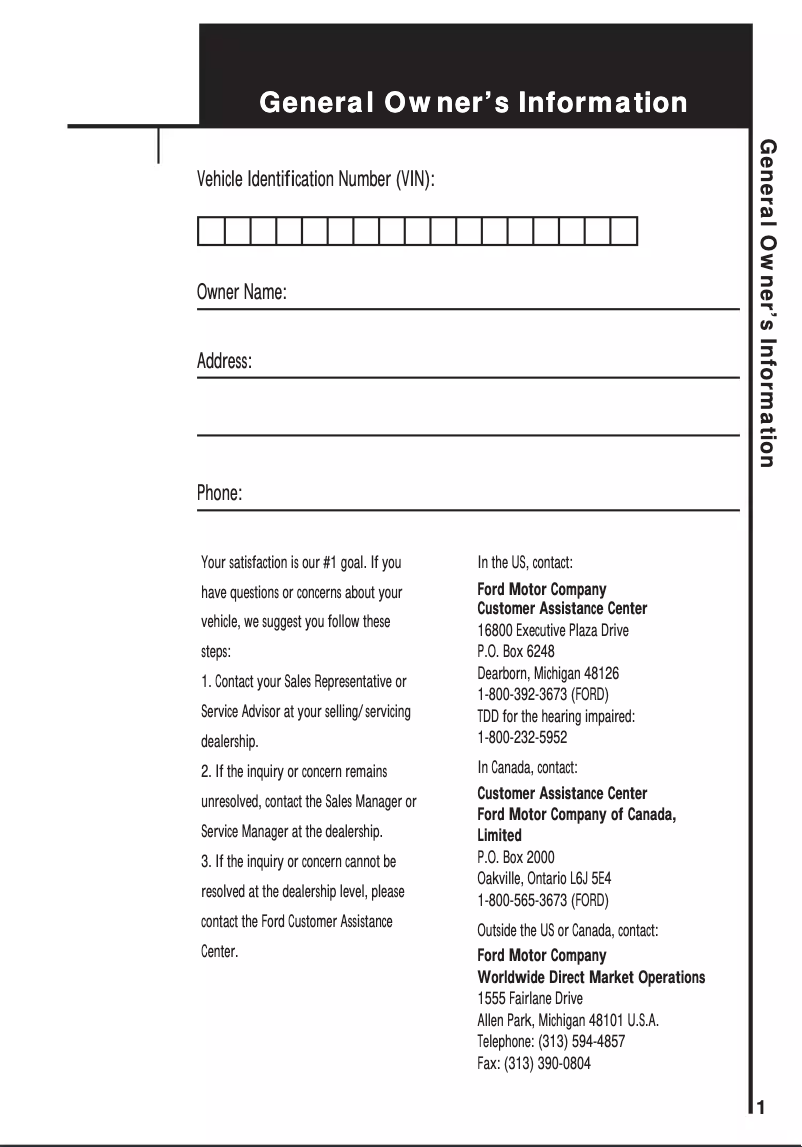
8 10

Editorial note

The Ford F-350 (1999) is a robust and durable vehicle, known for its solid construction that allows it to withstand tough driving conditions and heavy use. With impressive towing capacity, this model is ideal for both work and leisure. Its spacious interior offers comfort and storage options, making every trip enjoyable for passengers. However, this model also has some drawbacks. Its high fuel consumption can lead to additional costs, especially during times of rising fuel prices. Additionally, its large dimensions complicate maneuvering and parking, particularly in urban areas. The technology and safety features are also outdated compared to modern standards, which can affect safety and driving comfort. In terms of repairability, the Ford F-350 (1999) benefits from a wide availability of spare parts and maintenance manuals, making repairs easier. However, driving comfort may be limited over long distances due to a stiff suspension designed primarily for carrying heavy loads. Overall, the F-350 (1999) offers good resale value, although some aspects, such as fuel consumption and equipment, may require compromises.

Score details

Robustness

The Ford F-350 (1999) is known for its solid construction, capable of withstanding tough driving conditions and heavy use.

Performance

With its impressive towing capacity, this model excels in heavy-duty tasks, whether for work or leisure.

User experience

The spacious interior of the F-350 allows multiple passengers to travel comfortably, also offering adequate storage options.

Value for money

Ford's reputation for quality and innovation ensures good resale value, although high fuel consumption may lead to additional costs.

Usability

The large dimensions make maneuvering and parking difficult in tight spaces, especially in urban areas.

Features

The technology and safety features are outdated compared to modern standards, which can affect safety and driving comfort.

repairability

The wide availability of spare parts and maintenance manuals makes repairs and maintenance of the 1999 model easier.

comfort

Driving comfort may be limited, especially on long distances, due to a stiff suspension designed primarily for heavy loads.


Advantages

Robust and durable construction

Impressive towing capacity

Spacious and comfortable interior

Reliable brand with a good reputation

Ease of maintenance and repair

Disadvantages

High fuel consumption

Difficult maneuvering dimensions

Outdated safety technology

Possible reliability issues

Limited driving comfort

Technical Specifications F-350 (1999)

General Information

Frequently Asked Questions

How do I convert miles to kilometers?
One mile is equal to 1.609344 kilometers, while one kilometer is equivalent to 0.62137119 miles. Q: Where can I locate the VIN number of my Ford? A: The location of the VIN number varies by make and type of vehicle. This code may be engraved or affixed to the chassis. To find the exact location of the VIN number on your Ford, please refer to the owner's manual. Q: What is the VIN number? A: The VIN number is a unique identifier for each vehicle. VIN stands for Vehicle Identification Number. Q: How often should I have my Ford serviced? A: It is essential to perform regular maintenance on your vehicle. The maintenance manual provides information on the recommended frequency of services as well as the items to check. Generally, a major service is advised every two years or after 30,000 kilometers. Q: When should I change the brake fluid in my Ford? A: It is recommended to replace the brake fluid every two years. Q: What is the difference between E10 and E5 gasoline? A: E10 gasoline contains up to 10% ethanol, while E5 contains less than 5%. This means that the proportion of gasoline in E10 is lower than in E5, making it a more environmentally friendly option. Q: What should I do if one or more doors do not open from the inside? A: This is likely due to the child safety lock preventing the doors from being opened from the inside. The method to disable this safety feature varies by make and model. Q: My car radio won't turn on, what should I do? A: If the car radio is not connected, it will not receive power. Make sure the red wire is connected to the ignition power and the yellow wire is connected to the constant power. Q: Is the manual for the Ford F-350 (1999) available in French? A: Unfortunately, the manual for the Ford F-350 (1999) is not available in French. It is only offered in English.
Où puis-je localiser le numéro VIN de ma Ford ?
L'emplacement du numéro VIN varie selon la marque et le type de véhicule. Ce code peut être gravé ou fixé sur le châssis. Pour connaître l'emplacement précis du numéro VIN sur votre Ford, veuillez consulter le manuel du propriétaire.
Qu'est-ce que le numéro VIN ?
Le numéro VIN est un identifiant unique pour chaque véhicule. VIN signifie Vehicle Identification Number (numéro d'identification du véhicule).
À quelle fréquence devrais-je faire réviser ma Ford ?
Il est essentiel de procéder à un entretien régulier de votre véhicule. Le manuel d'entretien fournit des informations sur la fréquence recommandée des révisions ainsi que sur les éléments à vérifier. En général, une révision majeure est conseillée tous les deux ans ou après 30 000 kilomètres.
Quand dois-je changer le liquide de frein de ma Ford ?
Il est conseillé de remplacer le liquide de frein tous les deux ans.
Quelle est la distinction entre l'essence E10 et E5 ?
L'essence E10 contient jusqu'à 10 % d'éthanol, tandis que l'E5 en contient moins de 5 %. Cela signifie que la proportion d'essence dans l'E10 est inférieure à celle de l'E5, ce qui en fait une option plus écologique.
Que faire si une ou plusieurs portières ne s'ouvrent pas de l'intérieur ?
Cela est probablement dû à la sécurité enfant qui empêche l'ouverture des portières depuis l'intérieur. Le moyen de désactiver cette sécurité varie selon les marques et les modèles.
Mon autoradio ne s'allume pas, que dois-je faire ?
Si l'autoradio n'est pas branché, il ne recevra pas d'alimentation. Assurez-vous que le fil rouge est relié à l'alimentation de contact et que le fil jaune est connecté à l'alimentation constante.
Le manuel du Ford F-350 (1999) est-il disponible en français ?
Malheureusement, le manuel du Ford F-350 (1999) n'est pas disponible en français. Il est uniquement proposé en anglais.

Similar products


Discover the technical sheet of Kadett (1937) from Opel and its manuals...
Available manuals:
Discover the technical sheet of S60 R (2004) from Volvo and its manuals...
Available manuals:
Discover the technical sheet of Santa Fe (2019) from Hyundai and its manuals...
Available manuals:
Discover the technical sheet of Impreza (2010) from Subaru and its manuals...
Available manuals:
Discover the technical sheet of Mondeo (1996) from Ford and its manuals...
Available manuals:
Discover the technical sheet of Focus Electric (2013) from Ford and its manuals...
Available manuals:
Discover the technical sheet of Transit (2013) from Ford and its manuals...
Available manuals:
Discover the technical sheet of Fusion (2013) from Ford and its manuals...
Available manuals:
Discover the technical sheet of Transit Connect (2013) from Ford and its manuals...
Available manuals:
Discover the technical sheet of Mondial Quatrrovalvole (1982) from Ferrari and its manuals...
Available manuals:
Discover the technical sheet of Forester (2010) from Subaru and its manuals...
Available manuals:
Discover the technical sheet of Transit Connect (2014) from Ford and its manuals...
Available manuals:

Presentation of product F-350 (1999) specifications from brand Ford

General Information

The Ford F-350 (1999) is a robust vehicle from the Ford brand, known for its excellence and innovation in the automotive sector. This model is designed to deliver remarkable performance, ensuring a superior user experience. Its solid construction makes it a preferred choice for those seeking a vehicle capable of handling tough driving conditions and heavy use.

Advantages

The Ford F-350 (1999) stands out for its robustness and durability, allowing use in various environments without compromising performance. Its versatility is also a major asset, with impressive towing capacity that makes it ideal for heavy-duty work, whether in a professional setting or for recreational activities.

Inside, the F-350 offers a generous space that ensures comfort for multiple passengers while providing practical storage solutions. The reliability of the Ford brand gives users peace of mind, with good resale value. Additionally, the availability of spare parts and maintenance manuals makes maintenance and repairs easier.

Disadvantages

However, the Ford F-350 (1999) has some disadvantages. Its high fuel consumption can lead to additional costs, especially during fuel price increases. Moreover, its imposing dimensions make maneuvering and parking more difficult, particularly in urban areas.

In terms of technology and safety, this model may seem outdated compared to modern standards, which can affect safety and driving comfort. Additionally, some users may encounter reliability issues related to older components, leading to frequent repairs and potentially high maintenance costs. Finally, driving comfort may be limited over long distances due to a stiff suspension designed primarily to support heavy loads.