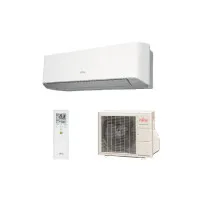
Thumbnail of product KQ6005 from brand IFM
Logo of brand IFM

Uncategorized IFM KQ6005

The IFM KQ6005 product, from the brand IFM, is a device recognized for its quality and innovation in the field of household appliances. This model, the KQ6005, is designed to ensure optimal performance and an enhanced user experience.

With a limited number of available documents set to one, the provided user manual allows users to fully leverage the features of this device. The brand IFM is known for its commitment to customer satisfaction, making it a wise choice for those seeking reliability and efficiency.

In summary, the IFM KQ6005 is a high-quality product that meets the daily needs of users while offering practical and intuitive use.

Manual of product KQ6005

7 10

Editorial note

The IFM KQ6005 model stands out for its reliability and innovation, hallmark characteristics of the IFM brand. This product is designed to deliver optimal performance, thus ensuring a smooth and efficient user experience. Its modern design allows for seamless integration into various environments, adding a functional touch to any space. However, it is worth noting that the KQ6005 can be costly compared to similar models, which may limit accessibility for some users. Additionally, the availability of spare parts and specific accessories may be restricted, making repairs and upgrades more complex. Although the product comes with a user manual, it may lack details, which could hinder intuitive and optimal use. Overall, the IFM KQ6005 is a quality product that meets expectations in terms of performance and design, while presenting some limitations that deserve consideration.

Score details

User experience

The KQ6005 model is designed to deliver optimal performance, ensuring a smooth and efficient user experience. However, the user manual may lack details, which can make its use less intuitive for some.

Performance

The IFM brand is recognized for its reliability and innovation, which assures users of a superior quality product, offering optimal performance for daily use.

Value for money

The product may be expensive compared to similar models, which can make it less accessible for some users, despite its quality.

Design

The design of the KQ6005 is intended to easily integrate into different environments, bringing a modern and functional touch.

repairability

The availability of spare parts or specific accessories may be limited, complicating necessary repairs or upgrades.

Documentation

The product comes with a user manual, but it may lack details or clear explanations, which can hinder optimal use.


Advantages

IFM brand: recognized reliability and innovation

Optimal performance for smooth use

User manual included for easy installation

IFM's commitment to customer satisfaction

Modern design that fits into various environments

Disadvantages

High cost compared to the competition

Spare parts sometimes difficult to find

Lack of advanced features available

Bulky weight or size for transport

Unclear and detailed user manual

Technical Specifications KQ6005

General Information

Frequently Asked Questions

How can I understand the symbols present in the IFM {item_name} manual?
To understand the symbols in the IFM KQ6005 manual, it is important to remember a few essential elements: 1. Operating elements: Brackets are used to indicate operating elements, for example, [OUT OFF] corresponds to the button marked "OUT OFF". 2. Instructions: Instructions are represented by a symbol in the shape of an arrow (►). For example, ► Install the device as indicated means to install the device according to the provided illustration. 3. Reactions: Responses to actions are indicated by the symbol ">". For example, > Yellow indicator light on indicates that the yellow light turns on following a specific action. 4. Important note: The manual contains crucial notes to highlight essential information, non-compliance with which may lead to malfunctions. 5. Safety instructions: It is essential to read the product description before installation to ensure compatibility with your application. The manual also mentions that any incorrect use may lead to malfunctions or undesirable effects. Following these symbols and instructions is essential to ensure safe and correct use of the IFM KQ6005. Q: What should I do if the IFM {item_name} model is not suitable for my application? A: If the IFM KQ6005 does not fit your application, here are the steps to follow: 1. Assess the specific needs of your application and compare them to the capabilities of the IFM KQ6005, considering detection, materials to be detected, and environmental conditions. 2. Consult the manual to check the compatibility of the IFM KQ6005 with various applications, looking for sections on recommended use cases or limitations. 3. If you have doubts about compatibility, contact the manufacturer's customer service, providing details about your needs for expert advice. 4. Explore other options: if the IFM KQ6005 is not suitable, consider other products offered by the manufacturer or similar ones on the market that may better meet your requirements. It is crucial to ensure that the chosen product is suitable to guarantee optimal performance. Q: What could be the reasons for malfunction or undesirable effects with the IFM {item_name}? A: If the IFM KQ6005 is experiencing malfunctions or undesirable effects, several causes may be considered. Here are steps to consider: 1. Switching point drift: Variations in operating conditions such as temperature, pressure, or humidity can shift the switching point. Check if significant changes have occurred. 2. Short-circuit protection: Although the IFM KQ6005 has short-circuit protection, excessive current from devices like incandescent lamps or relays can trigger this protection. Ensure that connected devices meet the sensor's specifications. 3. Operating voltage: Check that the sensor operates within the recommended voltage range, preferably with stabilized DC voltage. Consider any ripple in the power supply. If the problem persists after these checks, it is advisable to consult the technical data or contact IFM customer support for further assistance. Q: How do I use the IFM {item_name} capacitive sensor for level or proximity detection? A: To use the IFM KQ6005 as a capacitive sensor for level or proximity detection, follow these steps: 1. Programming: Use the programming buttons to adapt the sensor to the medium you wish to detect. 2. Level detection: Position the sensor so that it can detect the medium through the wall of a non-metallic tank. 3. Proximity detection: Place the sensor near the object or material to be detected. It can detect metals, almost all plastics, glass, ceramics, wood, paper, oils, fats, water, and other hygroscopic materials. 4. Switched signal: The IFM KQ6005 emits a switched signal to indicate the presence of the detected material, thus allowing the triggering of other devices or processes. By following these steps, you can effectively use the sensor in your application. Q: What types of materials can the IFM {item_name} detect, and how does it emit a switched signal? A: The IFM KQ6005 is capable of detecting a variety of materials and emitting a switched signal to indicate their presence. Here are the key points: 1. Material detection: The sensor can identify metals, almost all plastics, glass, ceramics, wood, paper, oils, fats, water, and other hygroscopic materials. 2. Switched signal: When it detects a material, the IFM KQ6005 provides a switched signal that indicates the presence of that material and can be used to trigger other devices or processes. It is important to note that the sensor can automatically adjust to the medium to be detected using the programming buttons. For level applications, it can detect through the wall of the tank, but this only applies to non-metallic tanks. With the capabilities of the IFM KQ6005, you can reliably detect various materials and use the switched signal for automation or control functions. Q: Can you provide troubleshooting tips if the IFM {item_name} does not detect the desired level in non-metallic tanks? A: If the IFM KQ6005 does not detect the desired level in non-metallic tanks, here are some troubleshooting tips: 1. Check the setting: Ensure that the sensor is correctly configured for the medium to be detected. Use the programming buttons to adjust the sensitivity. 2. Basic teaching in empty state: If emptying the tank is not possible, simulate this state by setting the sensor to a higher position. 3. Modified basic teaching in empty state: If deposits are present or if teaching in the empty state was not possible, consider modified teaching to ensure optimal operation. 4. Check sensor coverage: Ensure that the detection face is well covered by the medium in the tank. For a normally open (NO) output, the LED should light up, and for a normally closed (NC) output, it should turn off. By following these tips, you can resolve level detection issues with the IFM KQ6005. Q: Is the IFM KQ6005 manual available in French? A: Yes, the IFM KQ6005 manual is available in French.
Que faire si le modèle IFM {item_name} ne convient pas à mon application ?
Si le IFM KQ6005 ne s'adapte pas à votre application, voici les étapes à suivre : 1. Évaluez les besoins spécifiques de votre application et comparez-les aux capacités du IFM KQ6005, en tenant compte de la détection, des matériaux à détecter et des conditions environnementales. 2. Consultez le manuel pour vérifier la compatibilité du IFM KQ6005 avec diverses applications, en recherchant des sections sur les cas d'utilisation recommandés ou les limitations. 3. Si vous avez des doutes sur la compatibilité, contactez le service clientèle du fabricant en leur fournissant des détails sur vos besoins pour obtenir des conseils d'expert. 4. Explorez d'autres options : si le IFM KQ6005 ne convient pas, envisagez d'autres produits proposés par le fabricant ou similaires sur le marché qui pourraient mieux répondre à vos exigences. Il est crucial de s'assurer que le produit choisi est adapté pour garantir des performances optimales.
Quelles peuvent être les raisons d'un dysfonctionnement ou d'effets indésirables avec le IFM {item_name} ?
Si le IFM KQ6005 présente des dysfonctionnements ou des effets indésirables, plusieurs causes peuvent être envisagées. Voici des étapes à considérer : 1. Dérive du point de commutation : Des variations dans les conditions de fonctionnement comme la température, la pression ou l'humidité peuvent décaler le point de commutation. Vérifiez si des changements significatifs ont eu lieu. 2. Protection contre les courts-circuits : Bien que le IFM KQ6005 ait une protection contre les courts-circuits, un courant excessif provenant de dispositifs comme des lampes à incandescence ou des relais peut déclencher cette protection. Assurez-vous que les dispositifs connectés respectent les spécifications du capteur. 3. Tension de fonctionnement : Vérifiez que le capteur fonctionne dans la plage de tension recommandée, de préférence avec une tension continue stabilisée. Prenez en compte toute ondulation dans l'alimentation. Si le problème persiste après ces vérifications, il est conseillé de consulter les données techniques ou de contacter le support client IFM pour obtenir de l'aide supplémentaire.
Comment utiliser le capteur capacitif IFM {item_name} pour la détection de niveau ou de proximité ?
Pour utiliser le IFM KQ6005 comme capteur capacitif pour la détection de niveau ou de proximité, suivez ces étapes : 1. Programmation : Utilisez les boutons de programmation pour adapter le capteur au milieu que vous souhaitez détecter. 2. Détection de niveau : Positionnez le capteur pour qu'il puisse détecter le milieu à travers la paroi d'un réservoir non métallique. 3. Détection de proximité : Placez le capteur à proximité de l'objet ou du matériau à détecter. Il peut détecter les métaux, presque tous les plastiques, le verre, la céramique, le bois, le papier, les huiles, les graisses, l'eau et d'autres matériaux hydrophiles. 4. Signal commuté : Le IFM KQ6005 émet un signal commuté pour indiquer la présence du matériau détecté, permettant ainsi de déclencher d'autres dispositifs ou processus. En suivant ces étapes, vous pourrez utiliser efficacement le capteur dans votre application.
Quels types de matériaux le IFM {item_name} peut-il détecter, et comment émet-il un signal commuté ?
Le IFM KQ6005 est capable de détecter une variété de matériaux et d'émettre un signal de commutation pour indiquer leur présence. Voici les points essentiels : 1. Détection des matériaux : Le capteur peut identifier les métaux, presque tous les plastiques, le verre, la céramique, le bois, le papier, les huiles, les graisses, l'eau ainsi que d'autres matériaux hydrophiles. 2. Signal de commutation : Lorsqu'il détecte un matériau, le IFM KQ6005 fournit un signal de commutation qui indique la présence de ce matériau et peut être utilisé pour déclencher d'autres dispositifs ou processus. Il est important de noter que le capteur peut s'ajuster automatiquement au milieu à détecter grâce aux boutons de programmation. Pour les applications de niveau, il peut détecter à travers la paroi du réservoir, mais cela ne s'applique qu'aux réservoirs non métalliques. Avec les capacités du IFM KQ6005, vous pouvez détecter divers matériaux de manière fiable et utiliser le signal de commutation pour des fonctions d'automatisation ou de contrôle.
Pouvez-vous donner des conseils de dépannage si le IFM {item_name} ne détecte pas le niveau voulu dans des réservoirs non métalliques ?
Si le IFM KQ6005 ne détecte pas le niveau souhaité dans des réservoirs non métalliques, voici quelques conseils de dépannage : 1. Vérifiez le réglage : Assurez-vous que le capteur est correctement configuré pour le milieu à détecter. Utilisez les boutons de programmation pour ajuster la sensibilité. 2. Enseignement basique en état vide : Si vider le réservoir n'est pas possible, simulez cet état en réglant le capteur à une position plus élevée. 3. Enseignement basique modifié en état vide : Si des dépôts sont présents ou si l'enseignement en état vide n'a pas été possible, envisagez un enseignement modifié pour garantir un fonctionnement optimal. 4. Vérifiez la couverture du capteur : Assurez-vous que la face de détection est bien recouverte par le milieu dans le réservoir. Pour une sortie normalement ouverte (NO), la LED doit s'allumer, et pour une sortie normalement fermée (NF), elle doit s'éteindre. En suivant ces conseils, vous pourrez résoudre les problèmes de détection de niveau du IFM KQ6005.
Le manuel du IFM KQ6005 est-il disponible en français ?
Oui, le manuel du IFM KQ6005 est disponible en français.

Similar products


Discover the technical sheet of Beach from Sunny and its manuals...
Available manuals:
Discover the technical sheet of OY454S from IFM and its manuals...
Available manuals:
Discover the technical sheet of VSE951 from IFM and its manuals...
Available manuals:
Discover the technical sheet of E12346 from IFM and its manuals...
Available manuals:
Discover the technical sheet of A030.139.01 from Sunny and its manuals...
Available manuals:
Discover the technical sheet of N0538A from IFM and its manuals...
Available manuals:
Discover the technical sheet of ZZ0600 from IFM and its manuals...
Available manuals:
Discover the technical sheet of NV Goggles from Yukon and its manuals...
Available manuals:
Discover the technical sheet of Sandy from Sunny and its manuals...
Available manuals:
Discover the technical sheet of SF1200 from IFM and its manuals...
Available manuals:
Discover the technical sheet of SZ-JB02 from Zojirushi and its manuals...
Available manuals:
Discover the technical sheet of A030.139.00 from Sunny and its manuals...
Available manuals:

Presentation of product KQ6005 specifications from brand IFM

General Information

The product IFM KQ6005 belongs to the brand IFM, which is widely recognized for its commitment to quality and innovation in the home appliance sector. This model, the KQ6005, stands out for its optimal performance, providing users with an enhanced experience during its use.

Designed to meet consumer expectations, the KQ6005 ensures operational efficiency that makes it suitable for various environments. Additionally, its modern design allows for seamless integration into different spaces, adding an aesthetic and functional touch.

In terms of advantages, the reputation of IFM guarantees users a high-quality product, while the KQ6005 model comes with a user manual, making its installation and handling easier. However, it is worth noting that this model may be perceived as expensive compared to other options on the market, which could limit its accessibility for some. The limited availability of spare parts and the lack of advanced features may also pose challenges for those seeking more sophisticated equipment.

Conclusion

In summary, the IFM KQ6005 presents itself as a reliable and high-performing device, although it may not suit all budgets or those looking for more modern features. Its use in confined spaces may also require special attention due to its weight or size.