
Manual of product Retina II
Editorial note
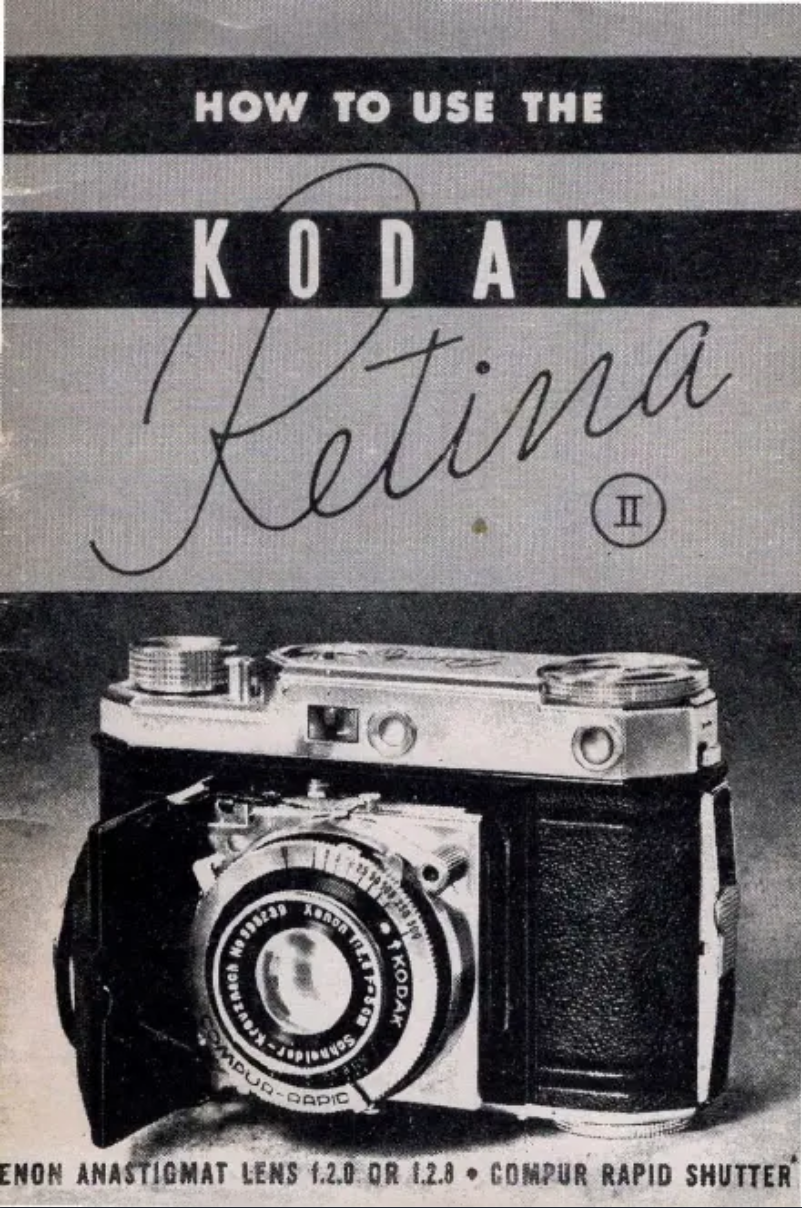
The Kodak Retina II is a camera that stands out for its exceptional image quality, delivering photos with remarkable clarity thanks to Kodak's engineering. Its ergonomic design allows photographers to use it comfortably, fostering creativity without distraction. Additionally, its durability and reliability make it a wise choice for everyday use. Accompanied by a detailed user manual, this device makes learning its features easier. However, the Kodak Retina II also has some drawbacks. Being an older model, it lacks certain modern features such as wireless connectivity and digital editing options. Its use requires some knowledge of photography, which can be intimidating for beginners. The limited availability of spare parts and accessories can also make maintenance difficult. Finally, while the image quality is excellent, it may not meet current standards, especially in low-light conditions. In terms of value for money, the Kodak Retina II is primarily aimed at vintage photography enthusiasts, offering an authentic experience. However, it may seem expensive for those looking for more contemporary features. Overall, this camera, with its classic design and quality craftsmanship, is a prized collectible, although its weight and size make it less practical for everyday use.Score details
User experience
The user experience is generally positive due to the ergonomic design of the device, although its use requires prior knowledge of photography.
Performance
The performance in terms of image quality is excellent, but may be limited compared to modern standards, especially in low light.
Design
The classic design of the Kodak Retina II is attractive and makes it a collectible item, although its weight and size are less practical for everyday use.
repairability
The limited availability of spare parts can complicate repairs, making maintenance a bit difficult for users.
Value for money
For vintage photography enthusiasts, the Kodak Retina II represents good value for money, although it may seem expensive for users looking for modern features.
Advantages
Exceptional and detailed image quality
Ergonomic and easy-to-use design
Proven durability and reliability
User manual included for learning
Classic and timeless design
Disadvantages
Limited modern features
Use requires knowledge of photography
Spare parts hard to find
Image quality below current standards
Heavy and bulky device
Technical Specifications Retina II
General Information
-
ModelRETINA II
-
Brand
-
Category
-
Type
-
SKU1649320
-
MPN1649320
Frequently Asked Questions
How do I insert the film into my Kodak Retina II camera?
How do I adjust the shutter speed and aperture on my Kodak Retina II?
My images are blurry. How can I focus correctly with my Kodak Retina II?
How do I adjust the film sensitivity (ISO) on my Kodak Retina II?
What should I do if the light meter on my Kodak Retina II is not working properly?
Is the manual for the Kodak Retina II available in French?
Similar products


More product categories from brand Kodak
More product types from brand Kodak





Presentation of product Retina II specifications from brand Kodak
General Information
The Kodak Retina II is an iconic camera from the Kodak brand, known for its expertise and innovation in the field of photography. This model, the Retina II, is designed to deliver optimal performance, ensuring an enriching user experience. Its ergonomic design allows for a comfortable grip, facilitating the creativity of photographers.
Advantages
Among the strengths of the Kodak Retina II, there is an exceptional image quality. Thanks to Kodak's careful engineering, this camera produces photographs with remarkable clarity and richness of detail, perfect for photography enthusiasts. Its durability and reliability are also among its strong points, as the device is designed to withstand the rigors of regular use while maintaining reliable performance.
The Retina II comes with a detailed user manual, which makes learning its various features easier and optimizes the shooting experience. Its classic design makes it not only an excellent tool for capturing images but also a collectible item appreciated by vintage lovers.
Disadvantages
However, the Kodak Retina II has some drawbacks. Being an older model, it may suffer from limitations in terms of modern features, such as the lack of wireless connectivity or advanced digital editing options. Additionally, its use requires some knowledge of photography, particularly for manual settings, which could be intimidating for beginners.
The availability of spare parts and specific accessories may also prove to be limited, making repairs and upgrades more difficult. Furthermore, the image quality may not meet current standards, especially in low-light situations or with modern lenses. Finally, its weight and size may be less practical for everyday use compared to more compact digital models.


