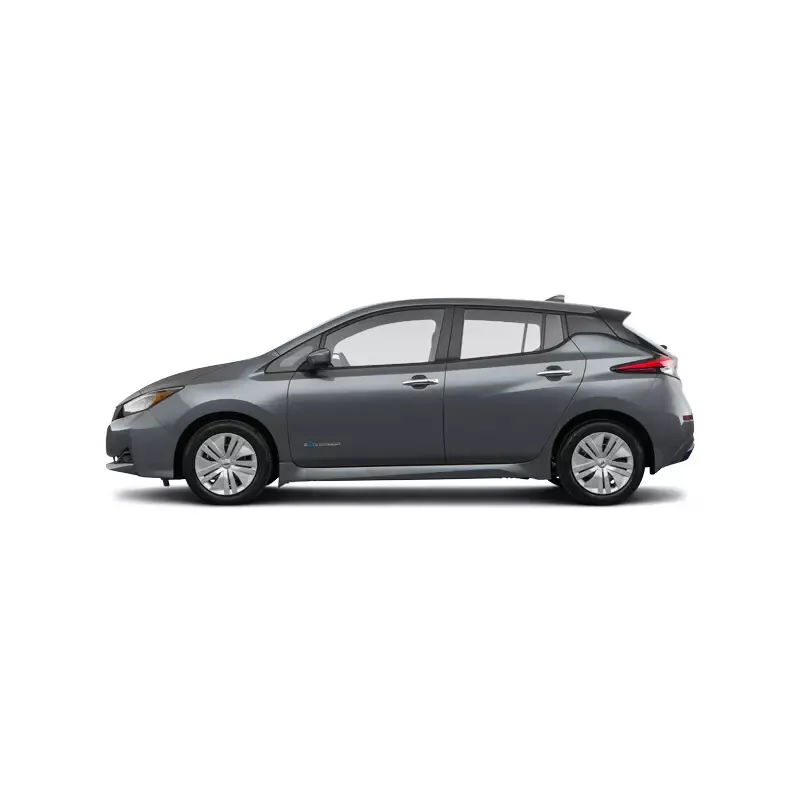

Manuals of product LEAF (2023)


Editorial note
The Nissan LEAF (2023) positions itself as an interesting option in the electric car segment, combining modernity and advanced features. Its eco-friendly character is a major asset, allowing for a reduction in CO2 emissions while enjoying the economic benefits associated with using an electric vehicle. Thanks to cutting-edge technologies, the LEAF offers a pleasant driving experience, with a spacious and comfortable interior that will satisfy passengers. However, some drawbacks deserve to be highlighted. Although its range is optimized for urban use, it can prove limited for long trips, which may be a drawback for some users. Additionally, the charging time can be long, especially without access to a fast charging station, which could pose a problem for those with a busy schedule. The lack of space for rear passengers and the potentially lower resale value compared to internal combustion engine vehicles are also aspects to consider. Overall, the Nissan LEAF (2023) offers good value for money, with savings on fuel costs and government incentives. The provided documents, such as the user manual and warranty information, are also very helpful for users. This model is therefore an option to consider for those looking for a reliable and high-performing electric vehicle, while being aware of its limitations.Score details
User experience
The user experience is very positive thanks to the integration of advanced technologies and a spacious interior offering comfort and quality.
Performance
The performance is satisfactory for daily use, but the LEAF may lack responsiveness for drivers seeking thrills.
Battery life
The range is optimized for urban use, but it can be limited for long trips, which can be a drawback.
Value for money
The LEAF allows for savings on fuel costs and offers government incentives, making it a good economic choice.
Usability
The charging time can be long, especially without a fast charger, which can be problematic in a busy schedule.
Design
The design is modern and compact, although the space for rear passengers may be limited, which can be an issue for families.
Support
The available documents, such as the user manual and warranty information, are comprehensive and useful for the user.
Advantages
Fully electric vehicle, environmentally friendly
Advanced technologies for improved driving
Fuel savings and government incentives
Sufficient range for long trips
Spacious interior and optimal comfort
Disadvantages
Insufficient range for long trips
Long charging time without fast charging station
Limited rear space for passengers
Less dynamic performance than competitors
Lower resale value than combustion vehicles
Technical Specifications LEAF (2023)
General Information
-
ModelLEAF (2023)
-
Brand
-
Category
-
Type
-
SKU1599885
-
MPN1599885
Frequently Asked Questions
How do I convert miles to kilometers?
Where is the VIN number located on my Nissan?
What is the VIN number?
How often should I have my Nissan serviced?
When is it advisable to change the brake fluid in my Nissan?
What is the difference between E10 and E5 gasoline?
What should I do if one or more doors do not open from the inside?
My car radio won't turn on, what should I do?
Is the Nissan LEAF (2023) manual available in French?
Similar products





More product categories from brand Nissan
More product types from brand Nissan

Presentation of product LEAF (2023) specifications from brand Nissan
General Information
The Nissan LEAF (2023) is an electric vehicle designed by the Nissan brand, known for its commitment to innovation and quality in the automotive sector. This model offers optimal performance and an enhanced driving experience while integrating cutting-edge technologies suited to modern needs.
Advantages
The Nissan LEAF (2023) stands out for several strengths:
- Eco-friendly: As a fully electric car, it helps reduce CO2 emissions, thus contributing to environmental preservation.
- Advanced technology: This model is equipped with driving assistance systems and modern connectivity features, providing an enriched driving experience.
- Cost savings: Using an electric vehicle allows for savings on fuel, while also benefiting from government incentives for eco-friendly car purchases.
- Optimized range: The LEAF (2023) offers a satisfactory range, ideal for daily commutes without requiring frequent recharges.
- Comfort and space: Its spacious interior and quality finishes ensure optimal comfort for passengers, with a generous trunk volume for transporting luggage.
Disadvantages
However, the Nissan LEAF (2023) also has some limitations:
- Limited range: Although adequate for urban use, its range may be insufficient for long trips, especially compared to some competitors with more powerful batteries.
- Charging time: The time required to recharge can be long, particularly without access to a fast charging station, which can be problematic for those with a busy schedule.
- Reduced interior space: The compact design of the LEAF limits space in the back, which can be uncomfortable for families on long journeys.
- Performance in dynamic driving: While well-suited for daily driving, it may lack responsiveness and excitement compared to other sportier electric vehicles.
- Resale value: Like many electric vehicles, the resale value of the LEAF may be lower than that of internal combustion engine cars, due to the rapid evolution of battery technology.


