

Manual of product Lumix DMC-LZ40
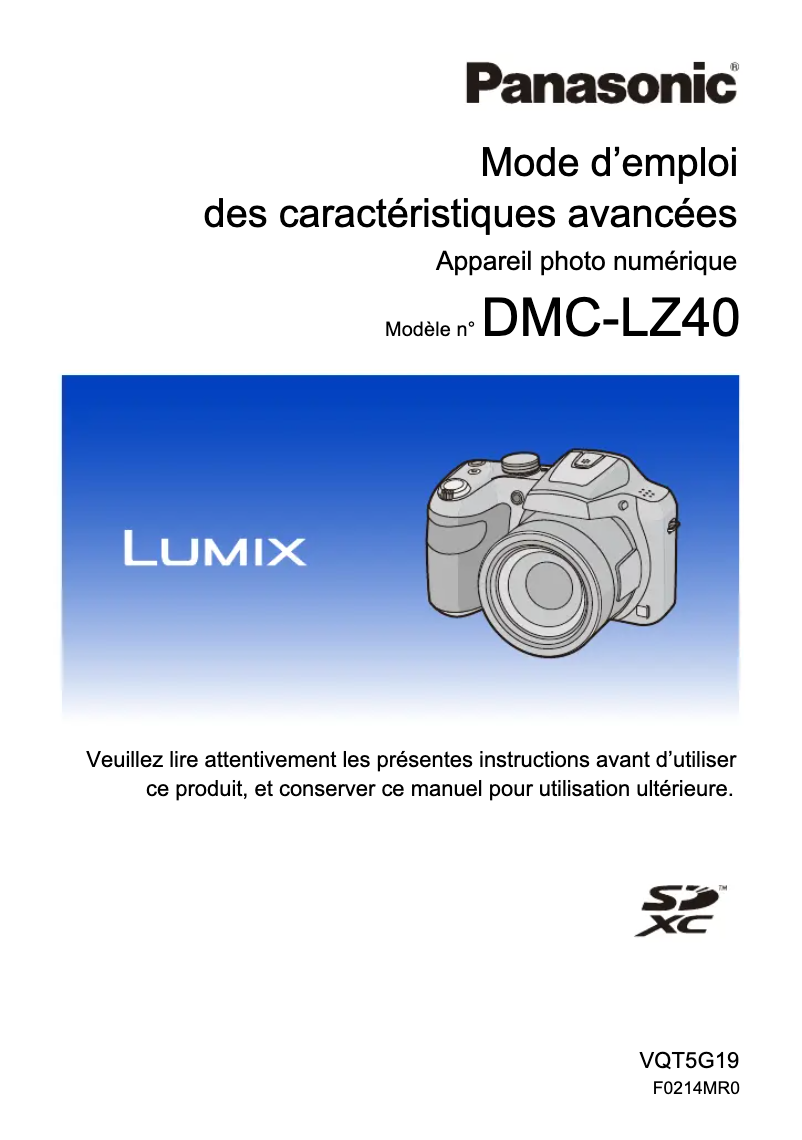
Editorial note
The Panasonic Lumix DMC-LZ40 stands out for its exceptional image quality, delivering sharp and detailed photos thanks to the brand's advanced technology. Its intuitive interface makes it easy to use, making it an ideal choice for beginners as well as more experienced photographers. Additionally, its versatility with a high-performance optical zoom allows for capturing distant subjects with precision. However, this device has some drawbacks. Although it is compact and lightweight, it may feel bulky compared to other compact models. The image quality may also be inferior to that of digital SLR cameras, especially in low-light conditions. Furthermore, some users might find the interface complex at first. The battery life is limited, requiring frequent recharges during long photography sessions, and the lack of advanced features like Wi-Fi or Bluetooth limits connectivity. Regarding the user experience, it is generally satisfactory, with a score of 75. Performance is rated as good, with a score of 70, but may be limited in certain conditions. The design of the device is appreciated, receiving a score of 80, while the documentation, with a score of 85, is accessible and helpful for maximizing the use of the device. Nevertheless, improvements can be made, particularly in terms of battery life (score of 60) and features (score of 65).Score details
User experience
The user experience is generally satisfactory thanks to an intuitive interface, although some beginners may find it complex.
Performance
The performance is good for photos in general, but the quality may be lower than that of digital SLR cameras, especially in low light.
Battery life
The battery life is limited, requiring frequent recharges during long photography sessions.
Design
The design is compact and lightweight, making it easy to transport, although it is relatively bulky compared to other compact models.
Features
The versatility of the optical zoom is an asset, but the lack of advanced features like Wi-Fi or Bluetooth limits connectivity.
Documentation
The user manual is accessible and provides practical tips to maximize the use of the device.
Advantages
Exceptional and detailed image quality
Intuitive interface for all users
Versatile optical zoom for distant subjects
Compact and lightweight, easy to carry
Accessible and practical user manual
Disadvantages
Bulky for a compact camera
Limited image quality in low light
Complex user interface for beginners
Insufficient battery life
No Wi-Fi or Bluetooth available
Technical Specifications Lumix DMC-LZ40
General Information
-
ModelLUMIX DMC-LZ40
-
Brand
-
Category
-
Type
-
SKU978505
-
MPN978505
Frequently Asked Questions
Can the manual for the Panasonic Lumix DMC-LZ40 be obtained in French?
Similar products


More product categories from brand Panasonic
Home appliances Panasonic
Phones Panasonic
Audio Panasonic
Camera and photography Panasonic
Personal care Panasonic
Other Panasonic
Tools Panasonic
Interior Panasonic
More product types from brand Panasonic








Presentation of product Lumix DMC-LZ40 specifications from brand Panasonic
General Information
The Panasonic Lumix DMC-LZ40 is a digital camera from the renowned brand Panasonic, known for its commitment to quality and innovation in the field of photography. This model is designed to deliver exceptional performance, ensuring an enriching user experience, whether for beginners or more experienced photographers.
Advantages
This model stands out for its remarkable image quality, thanks to Panasonic's advanced technology, which allows for capturing precise and detailed photos. Its versatile optical zoom makes it easy to shoot distant subjects while maintaining image clarity. Additionally, its compact and lightweight design makes it easy to carry, ideal for travel and outings. For users, a handy manual is available, providing useful tips to fully utilize the camera's features.
Disadvantages
However, the Panasonic Lumix DMC-LZ40 has some disadvantages. Its size is relatively bulky compared to other compact cameras, which may limit its transport comfort. Furthermore, the image quality may not match that of digital or hybrid SLR cameras, especially in low-light conditions. The user interface may also seem complex for beginners, making it a bit more challenging to learn its various features. Finally, the battery life may be limited, requiring frequent recharges during long photography sessions, and the lack of advanced features like Wi-Fi or Bluetooth may restrict connectivity options and quick photo sharing.


