
Manual of product Q
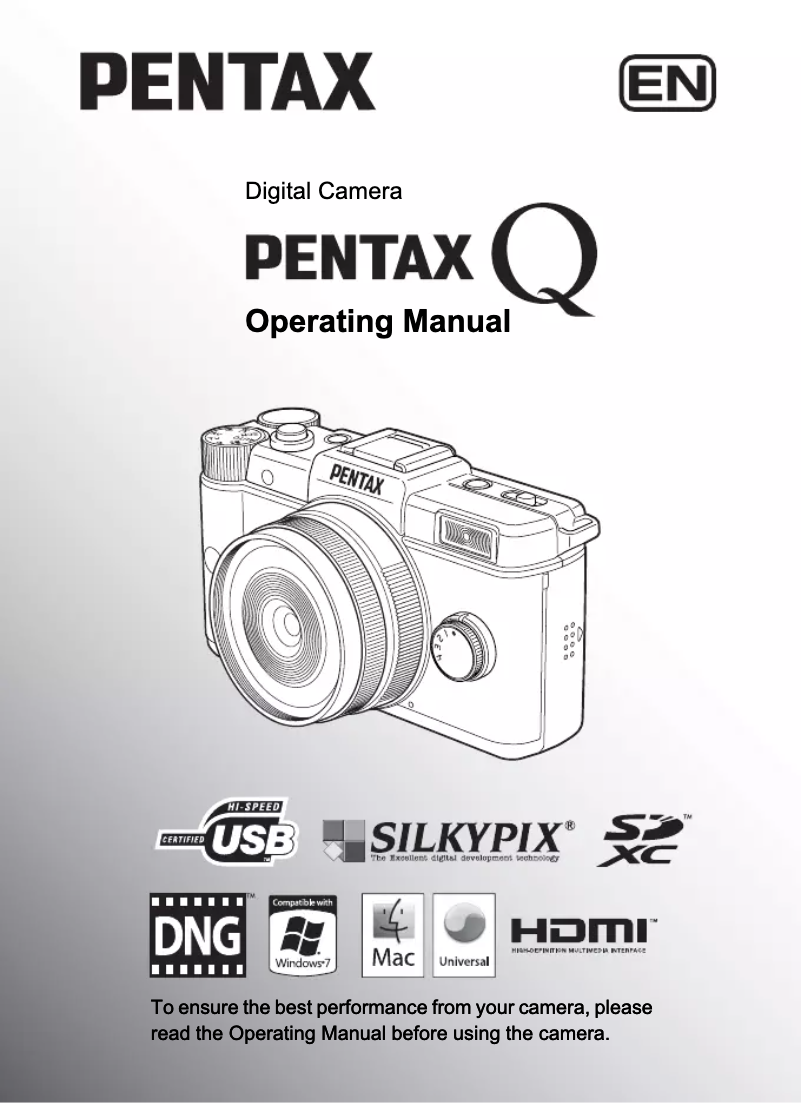
Editorial note
The Ricoh Q camera stands out for the quality and reliability that the Ricoh brand is known for providing. Its ergonomic design allows for a comfortable grip, which is an asset for long photography sessions. The performance of this device is impressive, with images captured with exceptional sharpness and precision. However, some aspects may pose a problem. Its user interface can seem complex for beginners, requiring an adjustment period to master all its features. Additionally, the quality of images in low light is not always up to expectations, which can limit shooting possibilities in less illuminated conditions. Regarding the battery, its lifespan is a weak point. For extended sessions, frequent recharges will be necessary. Finally, even though the quality of the product is undeniable, the cost of compatible accessories and lenses can significantly increase the overall usage budget. In summary, the Ricoh Q is an excellent choice for photographers seeking performance and comfort, but it requires a certain familiarity to fully take advantage of it.Score details
User experience
The recognized quality of the Ricoh brand ensures reliability and durability of the devices, thus guaranteeing an optimal user experience. However, the user interface may seem complex for beginners, requiring an adjustment period.
Performance
The Ricoh Q model is designed to deliver superior performance, allowing users to capture images with exceptional sharpness and accuracy. However, the image quality in low light may not meet expectations.
Battery life
The battery life may be insufficient for extended photography sessions, requiring frequent recharges.
Design
The ergonomic design of the Ricoh Q camera allows for a comfortable grip, thus facilitating long photography sessions.
Value for money
Although the product is of high quality, the cost of compatible accessories and lenses can be high, which may significantly increase the overall usage budget.
Advantages
Reliability and durability of the Ricoh brand
Superior performance for sharp images
Unique EAN for easy identification
User manual included for optimal use
Ergonomic design for a comfortable grip
Disadvantages
Relatively heavy and bulky to transport
Complex interface for beginners
Expensive accessories and lenses
Insufficient battery life
Poor quality in low light
Technical Specifications Q
General Information
-
ModelQ
-
Brand
-
Category
-
Type
-
SKU1375237
-
MPN1375237
Frequently Asked Questions
Is the Ricoh Q manual available in French?
Similar products


More product categories from brand Ricoh
More product types from brand Ricoh


Presentation of product Q specifications from brand Ricoh
General Information
The Ricoh Q camera is a product of the Ricoh brand, known for its commitment to innovation and quality in the photography sector. The Q model stands out for its exceptional performance, providing an enhanced user experience, whether for beginners or experienced photographers. With its EAN code 0662425839605 and 0662425839612, it is easily identifiable in distribution systems, thus facilitating its purchase and tracking.
Advantages
The Ricoh Q is distinguished by several notable strengths:
- The brand's reputation ensures reliability and durability of the devices, thus providing a quality user experience.
- This model is designed to deliver high-level performance, allowing for the capture of images with remarkable sharpness and precision.
- The provided user manual serves as a useful guide, ideal for maximizing the use of the device.
- Its ergonomic design ensures a comfortable grip, facilitating long photography sessions.
Disadvantages
However, there are a few disadvantages to consider:
- The Ricoh Q may be perceived as relatively heavy and bulky, which can pose difficulties during travel.
- Its user interface may seem complex for novices, requiring an adjustment period to master all its features.
- The cost of compatible accessories and lenses can be high, which may increase the overall usage budget.
- The battery life could be insufficient for extended sessions, leading to frequent recharges.
- Finally, the image quality in low light may not meet expectations, limiting shooting in less illuminated conditions.


