

Manual of product RD-300NX
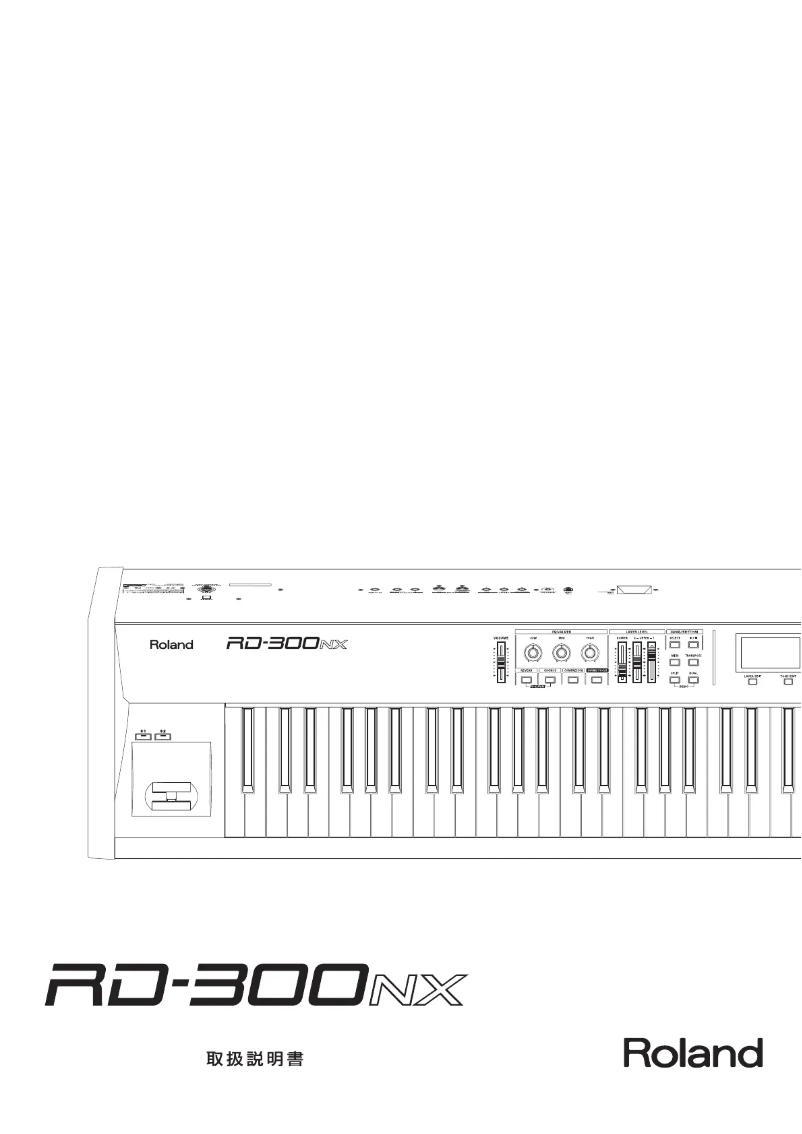
Editorial note
The Roland RD-300NX is a digital piano that stands out for its exceptional sound quality and versatility of use. It offers a faithful reproduction of sounds, allowing musicians to fully immerse themselves in their performance, regardless of their level. Its user-friendly interface makes it easy to navigate through the various features, although some users may find it complex at first. In terms of construction, the RD-300NX is robust and durable, making it a reliable choice for stage performances. However, its weight may pose a problem for those who need to transport it regularly. Additionally, while the sound quality is generally satisfactory, some musicians might find that the samples do not always compete with those of acoustic pianos. Regarding value for money, the cost of the Roland RD-300NX can be a barrier for limited budgets. Nevertheless, the features and quality offered justify this investment for music enthusiasts. Finally, the provided user manual is a major asset, helping users get the most out of this instrument. In summary, the Roland RD-300NX is an excellent choice for musicians looking for a high-performing and durable digital piano, despite some drawbacks related to its weight and price.Score details
User experience
The user-friendly interface of the Roland RD-300NX makes it easy to use, although some users may find it complex at first.
Performance
The exceptional sound quality and versatility make this piano a high-performing instrument for musicians of all levels.
Design
The sturdy construction ensures durability, although its weight may be a drawback for musicians on the go.
Value for money
The price of the Roland RD-300NX may be a barrier for some, although the quality and features offered justify the investment for enthusiasts.
Support
The provided user manual is comprehensive and helps users fully utilize the instrument's features.
Advantages
High-quality sound
Versatile for all styles
Intuitive and easy-to-use interface
Sturdy and durable construction
Detailed user manual included
Disadvantages
High price for limited budgets
Heavy weight for frequent transport
Non-intuitive user interface
Limited lifespan of components
Sound samples below expectations
Frequently Asked Questions
Is the manual for the Roland RD-300NX available in French?
Similar products


More product categories from brand Roland
More product types from brand Roland


Presentation of product RD-300NX specifications from brand Roland
General Information
The Roland RD-300NX is a digital piano from the renowned brand Roland, known for its excellence and innovation in the music instrument sector. This model, the RD-300NX, is specifically designed to deliver high-end performance, thus ensuring an enriching musical experience for users.
Advantages
This piano stands out for its exceptional sound quality, which allows for faithful reproduction of sounds thanks to high-quality samples. Musicians can thus enjoy an immersive audio experience, ideal for various musical styles.
Its versatility of use makes it a suitable choice for solo performances or for accompanying other instruments, making it accessible to everyone, from beginners to seasoned musicians.
The ergonomics of the device are also noteworthy: the user-friendly interface facilitates navigation between different functions, making its use intuitive.
Moreover, its robust construction ensures remarkable durability, making this instrument a reliable ally during stage performances and rehearsals. Finally, a detailed user manual is provided, allowing users to maximize the use of the available features and settings.
Disadvantages
However, the Roland RD-300NX has some drawbacks. Its price can be relatively high compared to other digital pianos, which may make it less accessible for tight budgets. Additionally, its weight may pose a problem for musicians who need to transport it frequently, as it is not as lightweight as some portable models.
Although the user interface is functional, it may seem complex for some, especially for those who are not familiar with digital pianos. Furthermore, the lifespan of the keys and electronic components could be limited, potentially requiring repairs after intensive use. Finally, while the sound quality is generally good, some users may feel that the samples do not always compete with those of a traditional acoustic piano.


