
Manual of product Fluid Level Sensor
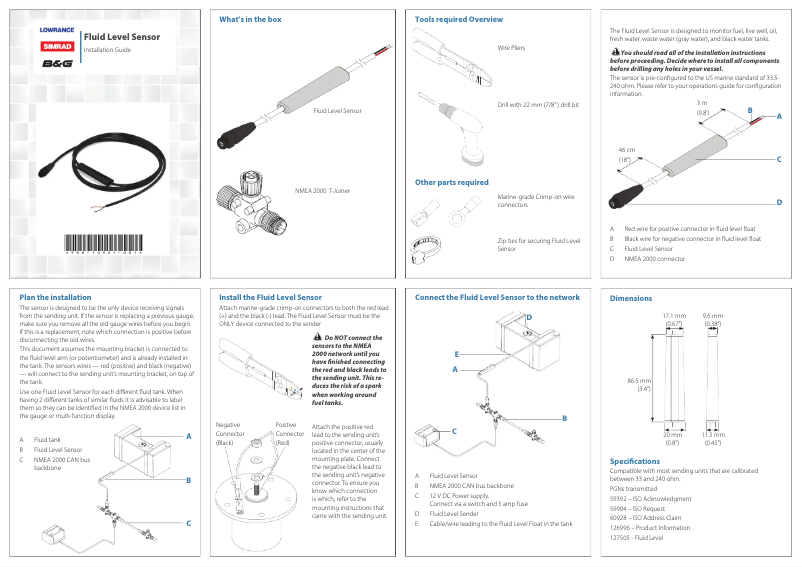
Editorial note
The Simrad Fluid Level Sensor stands out for its innovative design and reputation for reliability, characteristics that have made the Simrad brand well-known. With its clear user manual, it offers an accessible user experience, even for novices. Additionally, it ensures accurate and real-time monitoring, thereby optimizing the performance of fluid systems and adapting to various usage contexts. However, the price of the Simrad Fluid Level Sensor may be a barrier for some users, as it is relatively high compared to other sensors available on the market. Furthermore, its installation may require specific technical skills, which could pose an obstacle for those who are not familiar with this type of equipment. It is also important to note that the sensor may require regular maintenance, which could lead to additional costs in the long run. In summary, the Simrad Fluid Level Sensor is a quality product that guarantees robustness and performance, although it is necessary to consider the aspects related to cost and installation before making a purchase.Score details
User experience
The Simrad Fluid Level Sensor offers ease of use thanks to its clear manual, enhancing the user experience for all levels of expertise.
Performance
The sensor ensures accurate and real-time monitoring, thereby optimizing the performance of fluid systems.
Value for money
Although the product is of high quality, its price may be high compared to other similar sensors on the market.
repairability
The regular maintenance required to ensure the proper functioning of the sensor can increase long-term operating costs.
Robustness
Simrad's reputation for quality and robustness ensures a commendable reliability of this product.
Usability
Installation may require specific technical skills, which could pose a barrier for some users.
Features
The versatility of the sensor allows its use in various contexts, adapting to multiple monitoring needs.
Support
The product comes with a user manual, ensuring a good level of support for users.
Advantages
Innovative and sustainable design
Easy installation thanks to the manual
Accurate real-time monitoring
Versatile for various uses
Recognized reliability of Simrad
Disadvantages
High price compared to other sensors
Installation requires technical skills
Limited compatibility with certain systems
Regular maintenance required for operation
Connectivity issues in certain environments
Technical Specifications Fluid Level Sensor
General Information
-
ModelFLUID LEVEL SENSOR
-
Brand
-
Category
-
Type
-
SKU2003918
-
MPN2003918
Frequently Asked Questions
Is the Simrad Fluid Level Sensor manual available in French?
Similar products


More product categories from brand Simrad
More product types from brand Simrad





Presentation of product Fluid Level Sensor specifications from brand Simrad
General Information
The Simrad Fluid Level Sensor is a fluid level measurement device manufactured by the brand Simrad, known for its expertise and innovation in the home appliance sector. This sensor is designed to provide reliable performance, ensuring a satisfying and optimized user experience.
Advantages
Among the strengths of the Simrad Fluid Level Sensor, we note:
- Innovative design: This sensor is developed by a reputable brand, ensuring durable performance.
- Ease of use: Provides a clear user manual, making installation and use accessible to everyone, regardless of their level of experience.
- Performance optimization: Ensures accurate and real-time monitoring of liquid levels, promoting effective management of fluid systems.
- Versatility: Suitable for various contexts, offering a solution for different fluid monitoring needs.
- Reliability: Simrad's reputation enhances trust in the robustness of this product, providing peace of mind to its users.
Disadvantages
However, some limitations can be noted:
- High price: Its cost may be higher than that of other fluid level sensors, which could deter some buyers.
- Technical installation: Installation may require specific skills, posing a barrier for less experienced users.
- Limited compatibility: May require adaptations to integrate with certain existing systems or devices.
- Regular maintenance: Requires monitoring to maintain proper functioning, which can incur additional costs.
- Connectivity issues: May encounter interference in certain environments, which could affect measurement accuracy.


